
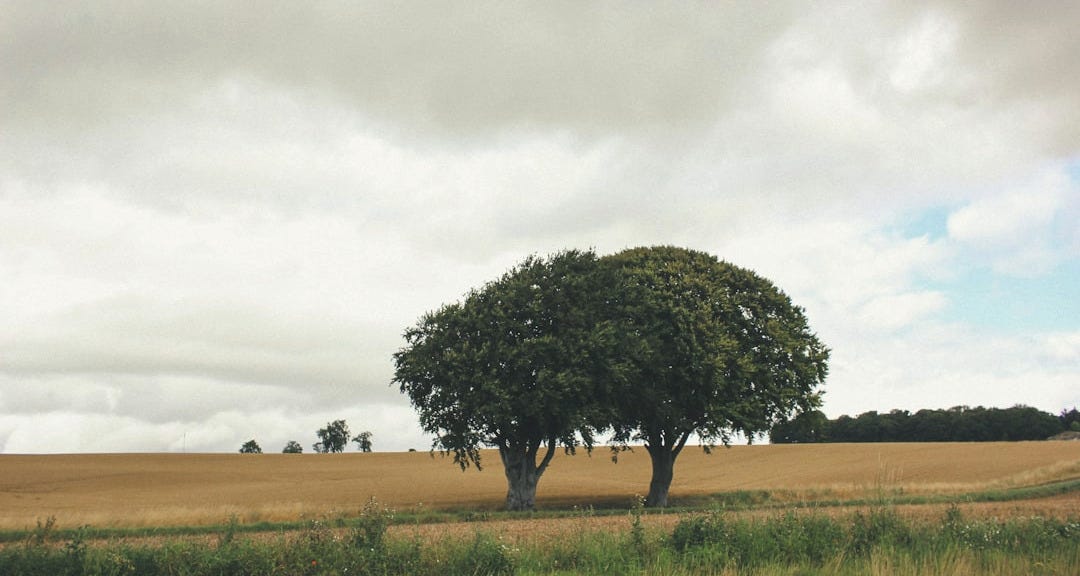
A favorite story of mine from Ovid’s Metamorphoses is the tale of Philemon and Baucis. The specific lines I have in mind are ones I got to read, reflect on, and cherish way back when. In fact, it was during my honeymoon. Fitting for a newlywed to read, as I hope you’ll soon see.
Before I give the text, I’ll give a few important notes of context. (Though if you don’t know the story of Philemon and Baucis, go take a moment to experience it for yourself! Their story is found in the eighth book of the Metamorphoses.) Philemon and Baucis are an elderly Phrygian couple who have been married from their youth. They live an extremely humble life, but they are cheerful, hospitable folk. When Jupiter and Hermes visit the Phrygian village in the guise of mere sojourners, no one shows them any hospitality, except of course for Philemon and Baucis. The couple’s reward—spoiler alert!—is that, at the end of their lives, they become trees together, so as never to be without the other.
The specific lines I have in mind for today are from near the beginning of the story (lines 635-636 to be precise):
nec refert, dominos illi famulosne requiras: / tota domus duo sunt, idem parentque iubentque.
It makes no difference should you seek lords there or slaves; / the two are the whole house, the same obey and give command.
(The Latin text I’m using is from the OCT, edited by R. J. Tarrant, Oxford: Oxford University Press, 2004).
While many romances feature wealthy lovers who can afford to spend all their time with one another, Philemon and Baucis are lovers who must perform their duties. In making preparations to host the gods, Philemon and Baucis are shown separately attending to pressing matters, like prepping meat and setting the table.
To me, these lovers seem to have the upper hand when it comes to romance. Poverty itself can’t diminish the life of love they live. Quite the opposite! Their impoverished situation itself fosters their unity. Unable to keep servants, the couple must rely and lean on one another for the upkeep and management of the home. Their mutual reliance, subservience, and resulting unity thus directly plays into the story’s climax, where Philemon and Baucis are united forever.
Fitting, very fitting, I should say, for reading on a honeymoon.